

Why Visible Private Security Guards in Cape Town Change Behaviour on Your Property

Visible private security guards influence how people behave from the moment they enter a property. Uniformed officers, cameras, lighting, patrols, warning signs, and technology-backed supervision create an immediate sense of control.
This is particularly relevant for mixed-use and commercial properties in Cape Town CBD, where high visitor volumes and continuous movement place additional pressure on access control, daily operations, and real-time risk detection.
At access-control level, guard presence sends a clear message: rules apply, activity is monitored, and misconduct may be addressed without delay.
First, people often adjust their actions when they feel observed. Visible PSIRA certified private security guards do more than respond to crime. They encourage rule compliance, order, and personal accountability.
In homes, offices, shops, warehouses, complexes, and parking areas, people are more likely to think before acting carelessly when officers are present. However, visible guarding becomes more effective when it is supported by patrol verification, incident reporting, access-control monitoring, and real-time operational intelligence.
What Are Visible Private Security Guards?
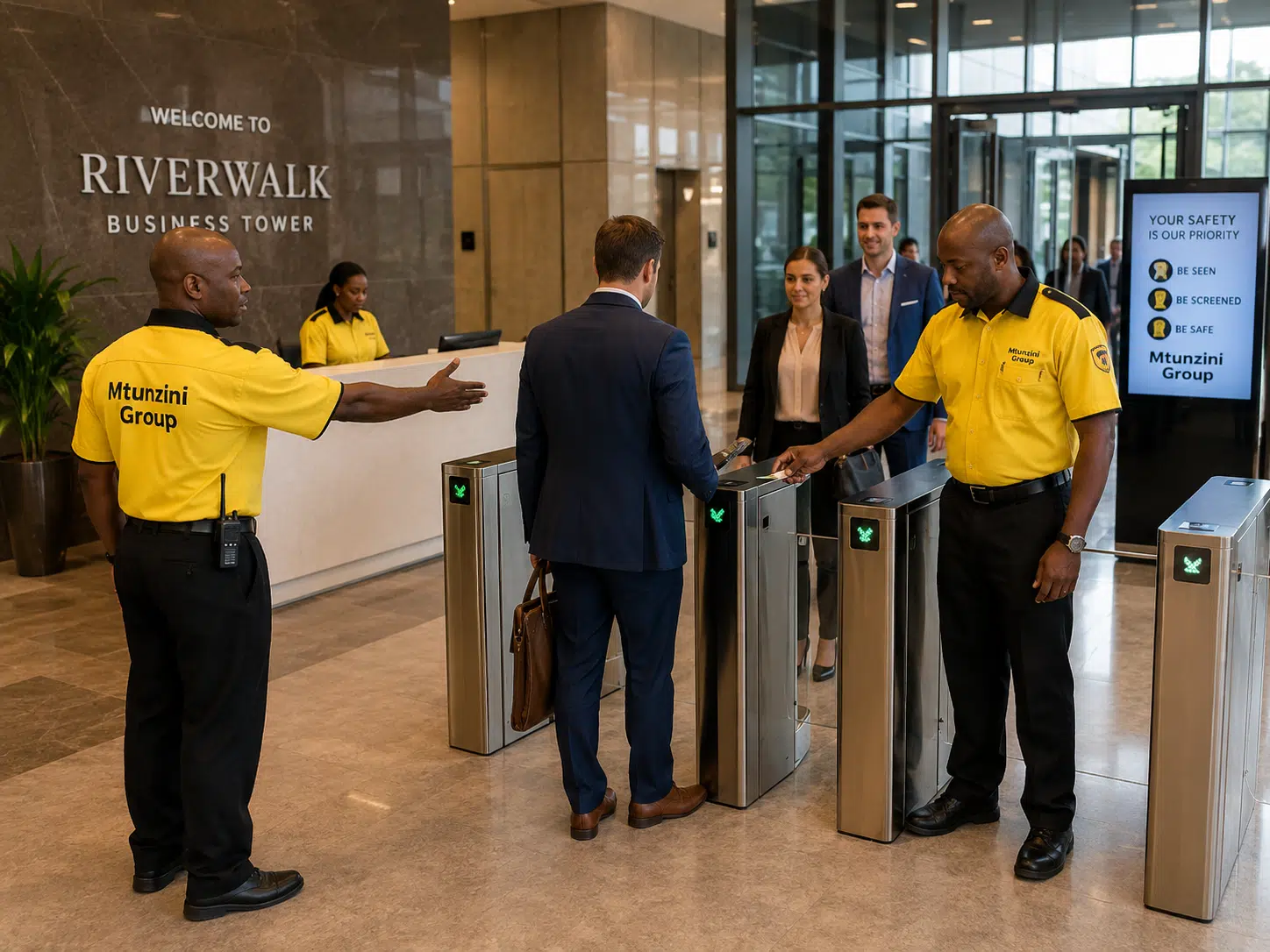
Visible private security guards are officers and security measures people can easily notice. These may include uniformed guards, CCTV cameras, patrol vehicles, lighting, access-point officers, and warning signs.
Together, these features show that the property is monitored and professionally managed. When combined with AI-supported surveillance, automated alerts, and operational records, visible guarding moves beyond presence and becomes part of proactive risk management.
This matters because many incidents occur when people believe no one is watching. Clear security presence reduces that opening, while integrated technology improves early warning and accountability.
Residential and Commercial Settings
In residential areas, visible guarding may include guards at gates, cameras near entrances, and lighting around shared spaces.
In commercial properties, it may include reception guards, CCTV systems, patrols, access-control monitoring, and reporting signs. From the entrance inward, these measures remind visitors, staff, and tenants that supervision is active.
For example, commercial properties in Claremont and business environments in Century City often manage significant staff, visitor, and contractor movement, making visible guarding an important part of orderly daily operations and proactive risk detection.
Visible Guards vs Hidden Security Systems
Hidden systems work in the background. These may include alarm sensors, access-control readers, automated threat alerts, AI-driven surveillance tools, or internal detection systems. They are valuable, although they may not change behaviour before an incident.
By comparison, visible guards work earlier. They influence conduct before action is taken because people can see officers, cameras, and patrol routines. When visible guards are connected to real-time intelligence, they are not limited to reacting after a problem; they can act on warning signs before risk escalates.
The Psychology Behind Guard Presence
Human behaviour changes when people feel observed. Visible private security guards create awareness that actions may be noticed, recorded, questioned, or reported.
Under active supervision, this awareness encourages better decisions and discourages careless, disruptive, or criminal conduct.
Operationally, guard presence works through risk awareness, social pressure, and self-control. Even rule-abiding people often act with more care when officers are present. When guard activity is supported by behavioural analytics, CCTV review, and patrol records, that awareness becomes measurable and easier to manage.
Observation Changes Decisions
When people feel watched, they consider possible outcomes before they act.
At reception and entry-point level, littering, trespassing, disorderly conduct, tailgating, and parking abuse may decrease when officers are present. Through access-control monitoring and incident reporting, repeated conduct patterns can also be identified before they become bigger operational problems.
Risk Perception and Consequences
Visible officers increase the perceived chance of being caught. People know cameras may record movement and guards may respond quickly.
This awareness does not have to be extreme. Even a mild sense of supervision can change behaviour. With automated alerts and real-time intelligence, the perceived risk becomes more practical because guards can receive faster information about suspicious movement, access breaches, or unusual activity.
Visible Private Security Guards Deter Crime
Visible private security guards can reduce crime by making access harder and detection more likely.
Through patrol verification, officer presence, cameras, access-control monitoring, and regular patrols, security risk becomes clear. When offenders see active guarding, they may move away rather than test the property.
In practice, this approach can reduce theft, vandalism, trespassing, and disorder when paired with trained officers, proper supervision, and intelligence-led technology that detects risk before it escalates.
Why Opportunistic Crime Drops
Opportunistic crime often occurs when access appears easy. Guards, patrols, cameras, lighting, automated detection, and access controls reduce that opening by making unlawful action more difficult and easier to detect.
Criminology Theories That Explain Guard Presence
Visible guarding connects to established criminology ideas. These theories explain why people often behave better in monitored spaces.
For property managers, security is not only about response. It also shapes conduct before incidents occur. Under an intelligence-led model, guarding also creates useful operational information from daily movement, access activity, patrol findings, and reported incidents.
Routine Activity Theory
Routine Activity Theory explains that crime may occur when an offender finds a target without a capable guardian present. Security officers, CCTV cameras, patrols, access checks, and automated alerts interrupt those conditions.
Broken Windows Theory
Broken Windows Theory suggests that disorder can invite further misconduct. A clean, monitored, and well-managed environment sends a different message. Visible guards show that the property is supervised and cared for, while consistent reporting allows recurring disorder to be recorded and corrected.
Natural Surveillance and Defensible Space
Natural surveillance means arranging spaces so people feel observed. Lighting, open layouts, camera placement, patrols, and access-control points all increase accountability. Within this layered security model, guard presence, access-point management, CCTV monitoring, and real-time reporting create safer environments.
How Visible Private Security Guards Affect Law-Abiding People
Visible private security guards influence everyone, not only offenders. Law-abiding people also tend to act with more care when officers are present.
At conduct-management level, visible guarding encourages respect for rules and shows that the property has clear operating standards.
This can be particularly noticeable in high-traffic residential and mixed-use areas such as Sea Point, where visitor access, parking management, and common-area conduct require continuous supervision supported by clear reporting and access-control discipline.
Rule Compliance
Parking control, visitor sign-in, access procedures, waste rules, and common-area standards are often followed more carefully when security is present and when repeated breaches are recorded through daily operational reporting.
Security Measures That Influence Behaviour
Uniformed Guards
Uniformed guards show authority and order. Their presence can change behaviour and allow quick action when incidents occur. When officers receive real-time information from cameras, access-control points, and patrol systems, their role becomes more proactive.
Cameras and Warning Signs
Cameras and signs tell people that actions may be recorded. This awareness can reduce careless or unlawful behaviour quickly. AI-supported camera analytics and automated alerts can also draw attention to unusual movement, loitering, or activity outside normal patterns.
Lighting and Patrols
Good lighting and regular patrols reduce hiding places and blind spots. This encourages responsible conduct and makes suspicious movement easier to detect. Through patrol verification, owners and managers can also confirm whether key areas were checked as required.
Operational Records
Attendance checks, patrol records, supervisor visits, access-control activity, and incident reports create accountability around daily guarding activity. These records also turn guarding into a measurable process instead of a passive security presence.
Limits of Visible Private Security Guards in Cape Town
Visible private security guards work best as part of a complete security plan. They cannot replace alarms, access-control systems, incident reporting, supervision, automation, or management oversight.
High-risk properties may require alarms, restricted access, CCTV monitoring, visitor logs, patrol points, automated threat alerts, behavioural analytics, and emergency response procedures.
How Property Owners Can Apply Visible Private Security Guards
Planning improves the effect of visible guarding. Guards, cameras, lighting, signs, access-control systems, and monitoring tools should be placed where they can influence conduct and detect risk.
Key areas include entrances, reception areas, loading points, parking areas, blind spots, and other high-risk zones.
Guards should work from clear post orders, escalation steps, visitor procedures, patrol duties, reporting requirements, and real-time communication channels so that daily activity can be managed rather than left to assumption.
Key Benefits of Visible Private Security Guards for Property Owners
Visible private security guards provide long-term value by reducing incidents, improving conduct, supporting proactive risk detection, and protecting property reputation.
Safe and orderly properties attract residents, tenants, customers, and staff.
Over time, professional security builds confidence and encourages responsible behaviour across the property. When guarding is supported by technology, reporting, and active supervision, owners gain a clearer view of risk patterns and daily security performance.
Conclusion
Visible private security guards shape behaviour before incidents occur. Their presence affects how people enter, move, park, interact, and respond to rules.
For property owners and managers, visible guarding forms a practical part of crime prevention, conduct management, daily operational discipline, and proactive risk management.
Whether managing an office building in Cape Town CBD or overseeing a residential or commercial property elsewhere in the city, visible private security guards contribute to more controlled environments and better day-to-day compliance with property rules and procedures.
Mtunzini Group provides PSIRA-registered private security services for properties that require trained officers, active supervision, patrol accountability, technology-supported reporting, and professional guarding standards.
Learn More About Security Guarding Services
Email Mtunzini Group
Frequently Asked Questions
How Does Proactive Risk Management Improve Security Outcomes?
Proactive risk management identifies vulnerabilities before incidents occur. Regular reviews of access points, visitor procedures, patrol activity, incident reports, and environmental conditions allow property owners to address risk early.
Why Are Security Risk Assessments Important?
Security risk assessments provide a systematic review of threats, vulnerabilities, and current protective measures. They allow property owners and managers to identify coverage gaps and prioritise improvements according to the property risk profile.
How Should Property Owners Balance Technology and Security Personnel?
The correct balance depends on property size, exposure, operating hours, and occupancy patterns. Technology extends monitoring capability, while security personnel assess situations, apply judgement, and respond when incidents occur.
What Role Does Supervision Play in Effective Guarding?
Visible guarding is most effective when officers work under regular supervision and clear operating procedures. Inspections, attendance verification, incident reviews, technology checks, and performance reviews maintain consistency across daily activities.
Why Should Visible Guarding Be Part of a Layered Security Strategy?
Visible guarding delivers greater value when combined with access control systems, CCTV monitoring, lighting, visitor procedures, automated alerts, patrol verification, and incident reporting. From an operational perspective, each layer adds a different form of protection and oversight.
“`